
Can you stop a multi-stage cyber attack before it cripples your business?
You need a clear, actionable roadmap that helps you reduce exposure and detect intrusions early. Today’s multi-stage campaigns give defenders many chances to interrupt an attack during discovery, lateral movement, or data staging.
One in four breaches involve ransomware, downtime can reach weeks, and recovery costs keep rising. Boards in Italy and beyond now treat this as a board-level risk, and 94% of organizations are boosting budgets for resilience.
In this guide you will get plain-language steps that map to your users, systems, and backups. You will learn which controls deliver the most impact first — patch cadence, identity hardening, endpoint controls, and immutable backups — so you can protect business-critical data without guesswork.
Key Takeaways
- Layered security gives multiple chances to stop a campaign before files are encrypted.
- Prioritize patch cadence, identity hardening, and immutable backups for quick wins.
- Continuous monitoring and security ratings provide outside-in visibility.
- Map actions to users, systems, and the organization to focus limited resources.
- This guide applies to SMBs and enterprises and helps you talk to executives in plain terms.
- You can start today and mature your posture as threats evolve.
Why ransomware attacks demand your attention in 2025
Today’s extortion campaigns have evolved into organized, repeatable operations that hit companies across every sector.
Key trends show an expanded attack surface driven by hybrid work, cloud adoption, and complex supplier chains. You now face more exposed services and remote access points that make it easier for adversaries to probe your network.
Attacks have industrialized: groups publicly claim thousands of incidents and use extortion to amplify reputational and regulatory harm. One in four breaches involve ransomware, and organized crime actors use it in over 62% of reported incidents.
What this means for your company
Downtime typically spans weeks, and recovery costs often exceed the ransom. Consumers may abandon services after a disruption, so resilience affects revenue and trust.
Board-level focus
Boards and CISOs track likelihood, impact, and time-to-recover. As a result, 94% of organizations attacked are raising budgets for both prevention and recovery. You should invest in measurable controls—patch cadence, TLS/SSL hardening, and immutable backups—to reduce dwell time and lower overall risk.
Understanding the ransomware threat landscape

Modern extortion campaigns move methodically through stages, giving attackers clear windows to probe and escalate.
How modern campaigns work:
From phishing to double extortion
Initial access often starts with phishing or an unpatched exploit. From there, the attacker runs discovery and credential theft to find high-value targets.
Adversaries abuse legitimate tools—RDP, PowerShell, PsExec, WMI, and remote support utilities—to blend in and evade detection. They commonly steal sensitive data before encrypting files, enabling double extortion and more leverage.
Multi-stage attacks: what to watch for
- Initial access: T1566 (phishing), T1190 (exploits).
- Recon and discovery: directory enumeration, new service creation, suspicious scheduled tasks.
- Lateral movement and C2: T1021 (remote services) and covert command-and-control channels.
- Impact: T1486 (file encryption) often follows data staging and exfiltration.
Why this matters: view these threats as a sequence of behaviors you can detect and disrupt. Use endpoint and network telemetry plus threat intelligence to cut attacker dwell time and protect your environment.
Ransomware prevention
Your strongest gains come from combining identity controls, email filtering, and fast patching.
Start with core building blocks: deploy an NGFW with deep packet inspection, endpoint protection (EDR/XDR), and a secure email gateway. Combine these with phishing‑resistant training and continuous monitoring driven by security ratings.
Apply simple operational rules. Scan attachments, allow only trusted downloads, never plug unknown USBs, and use a VPN on public Wi‑Fi. Maintain immutable backups and test restores so recovery is reliable.
- Layer defenses: identity, perimeter, endpoints, and backups to stop attacks at multiple stages.
- Fast wins: accelerate patch cadence, enforce MFA, and add advanced email filtering and sandboxing.
- Adopt technical solutions: NGFW with DPI, EDR/XDR, and secure email gateways to block delivery and lateral movement.
- Harden configs: manage TLS/SSL and remote access settings to remove easy attacker targets.
- Operational management: asset inventory, vulnerability scanning, and continuous monitoring to sustain gains.
- Human layer: just‑in‑time training, phishing simulations, and policies against risky device use.
- Access controls: enforce least privilege and role separation so a single account can’t escalate widely.
- Design for recovery: immutable copies and cleanroom validation as part of normal tooling and management.
- Measure progress with security ratings and hygiene metrics to show reduced risk.
| Control | Role | Immediate Benefit | Metric to Track |
|---|---|---|---|
| NGFW with DPI | Perimeter filtering | Blocks known C2 and exploits | Blocked threats / day |
| EDR / XDR | Endpoint detection | Detects lateral movement | Dwell time (hours) |
| Secure email gateway | Email filtering | Stops malicious attachments | Phishing click rate |
| Immutable backups | Recovery | Ensures business continuity | Restore success rate |
Start smart: assess your current state against trusted frameworks

Before buying tools, map gaps against a trusted framework and real-world ratings.
Use the NIST Cybersecurity Framework to baseline Identify‑Protect‑Detect‑Respond‑Recover capabilities. This gives you a common language for governance and audit reporting.
Map risks with NIST and external ratings
Combine NIST mapping with outside‑in scores. Bitsight evaluates 23 risk vectors and processes 250+ billion measurements daily. Companies with ratings below 600 are about 6.4x more likely to be targeted successfully than those near 750.
Questions to baseline your environment, users, vendors, and controls
- Do you maintain a current asset inventory and privileged user list?
- Which critical systems and vendor links are internet‑exposed?
- How fast is your patch cadence and TLS/SSL hygiene?
- Do you use threat intelligence and continuous ratings to inform fixes?
Prioritize high‑impact fixes first—patch cadence, TLS/SSL, and access management—then sequence deeper remediation. Track progress with ratings and internal KPIs so leadership sees measurable risk reduction and better security management.
Cyber hygiene best practices to reduce risk fast
Faster patch cycles and strict certificate management shrink the time attackers have to act.
Increase patching cadence to shrink exposure windows
Poor patching cadence correlates to nearly a sevenfold increase in ransomware risk, so move to monthly updates for OS, VPN appliances, firewalls, and critical software.
Apply zero‑day or out‑of‑band fixes immediately when available. Automate vulnerability alerting and endpoint scanning to triage issues before they are weaponized.
TLS/SSL configuration grades at C increase risk by about 4x; C‑grade certificates raise risk roughly 3x. Rotate and renew certificates on schedule and enforce strong cipher suites.
Implement change controls that flag downgrades or expired crypto on internet-facing services. Standardize secure baselines and verify continuous compliance across devices and systems.
- Automate discovery and remediation workflows to reduce mean‑time‑to‑remediate.
- Monitor patch SLAs and report SLAs to leadership so hygiene improvements are visible.
- Ensure EDR agents are healthy across your fleet to detect attacks that bypass perimeter defenses.
- Reinforce user education to limit shadow IT and risky downloads.
Lock down identity, access, and your attack surface
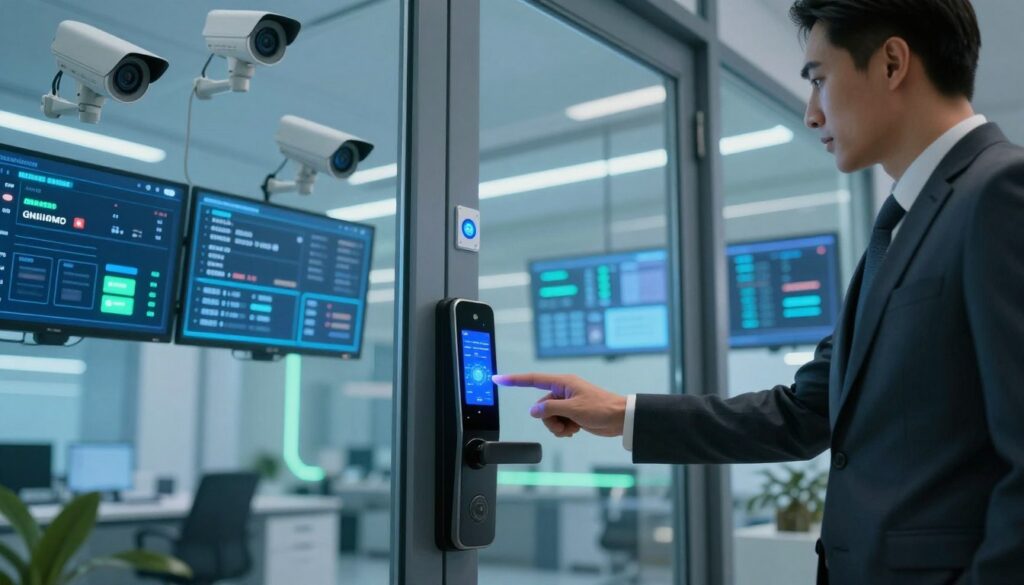
Locking down who can do what cuts attacker options faster than any single tool. Start with simple, enforceable rules that protect your users, systems, and network. Treat identity as the core control and build segmentation to limit how far an attacker can move.
Zero trust in action
Enforce least privilege, MFA, and RBAC for all high‑risk accounts. Require MFA for remote access, admin portals, and backup consoles. Vault service credentials and keys with MFA and full audit trails to stop silent privilege escalation.
Segment to limit lateral movement
Isolate production and backup networks from end‑user segments. Micro‑segment critical environments so a compromised device cannot reach core systems.
- Monitor privileged sessions and flag unusual access patterns to cut attacker dwell time.
- Review and remove stale permissions regularly to shrink the attack surface.
- Validate segmentation with red and purple team exercises to ensure controls hold under real attacks.
Result: stronger access controls plus targeted segmentation reduce the chance that a single compromise escalates into a full‑scale attack on your organization.
Email, social engineering, and remote access controls
A single spoofed message can open a path to credential theft and widespread compromise. Protecting delivery and user response reduces that risk while you harden remote sessions.
DKIM, SPF, DMARC and advanced filtering to stop spoofing and malicious links
Deploy DKIM, SPF, and DMARC to authenticate senders and cut brand impersonation. Combine these with sandboxing, URL rewriting, and attachment inspection to block delivered threats.
Scan every incoming email for malware and avoid unverified links or attachments. Enforce browser controls to block risky file types and permit downloads only from trusted sites.
Phishing‑resistant culture: simulations, just‑in‑time training, and policy enforcement
Run regular simulations and just‑in‑time prompts so users learn in context. Provide a clear report workflow for suspicious emails and simple playbooks that tell staff what to do.
Require VPN on public Wi‑Fi to protect credentials and sessions. Tune detections for unusual logins and remote patterns so you spot compromises before they escalate.
- Authenticate senders and apply layered email filtering.
- Enforce download and browser policies to limit risky behavior.
- Train with simulations and immediate remediation prompts.
- Log and monitor remote sessions; require VPN in public spaces.
Backups that save the day: resilient, immutable, and tested

Your backups should be treated as a defensive system, not a dusty archive. Design them assuming attackers will try to corrupt or delete restore points. That mindset drives choices that keep your data recoverable and your business running.
Adopt 3‑2‑1‑1‑0 with immutable and air‑gapped copies
Follow the 3‑2‑1‑1‑0 rule: three copies, two media, one off‑site, one immutable or offline, and zero surprises through testing. Use immutable object storage, WORM media, and air‑gapped copies so attackers cannot erase or encrypt every restore point.
Cleanroom recovery and automated playbooks
Validate restores in a cleanroom before reintroducing systems. Scan every restore point for malware and confirm integrity.
Automate runbooks to orchestrate steps, reduce human error, and speed time‑to‑restore during an incident.
Encrypt backups and secure keys
Encrypt backups at rest and in transit. Store keys in a hardened vault and enforce strict access controls to blunt exfiltration and tampering.
- You will diversify storage across on‑prem, cloud object storage with immutability, and tape/WORM for layered resilience.
- Test restores on schedule and measure recovery time objectives so your team knows it will work under real conditions.
- Document roles, communication, and escalation paths so response to encrypted files or a ransom demand is fast and clear.
Detect early: behavioral analytics, IOC tools, and continuous monitoring
Detecting subtle changes in system behavior gives you a chance to stop an attack before files are locked.
Use behavior and AI-driven scans to reveal entropy spikes, ransom notes, or misuse of known IOC tools such as RClone, WinSCP, and Cobalt Strike. These signals often appear long before encryption starts.
Map detections to MITRE ATT&CK
Align rules to common techniques: phishing (T1566), exploitation (T1190), PowerShell abuse (T1059.001), lateral movement (T1021), shadow copy deletion (T1562), and encryption (T1486). Mapping helps you tune alerts and reduce false positives.
Endpoint, network, and email layers
Integrate EDR/XDR, NGFW with DPI, and advanced email telemetry so detections correlate across devices and the network. Baseline normal user and device activity and flag deviations that suggest a staged attack.
- Deploy behavior-based detection for encryption patterns and privilege anomalies.
- Monitor for unusual RDP, PsExec, WMI, RClone, and PowerShell use tied to lateral movement.
- Connect alerts to automated containment: isolate hosts, disable accounts, and block outbound C2.
| Layer | Focus | Example Indicator | Metric |
|---|---|---|---|
| Endpoint | Process chains, entropy | PowerShell spawning cmd.exe | Mean time to detect (hours) |
| Network | Traffic anomalies | Unusual outbound to C2 domains | Suspicious connections / day |
| Delivery telemetry | Phishing link opens, attachments | Phish click rate |
Practice detection drills so your team moves quickly from a trigger to investigation and containment. Continuous monitoring across internal and third-party environments gives daily visibility and helps you spot threats early.
Third‑party and supply chain risk management
Vendor posture can change overnight, so continuous checks are essential to protect your systems and reputation.
Over 90% of companies report a breach originating in a vendor’s IT environment. Continuous monitoring uncovers shifts across third and fourth parties so you can act before issues cascade into your network.
Security ratings provide daily, objective measurements across 23 risk vectors. Lower ratings often predict a higher chance of breach, helping you prioritize engagement and remediation.
Continuously monitor vendor security posture and risky changes
- You gain outside‑in visibility into exposed services, expired certificates, and compromised systems so you can reduce systemic risk.
- Use ratings and continuous intelligence to flag suppliers whose metrics correlate with ransomware attacks and other targeted attack activity.
- Embed clear remediation timelines in contracts and security addenda to enforce accountability and reduce vendor risk to your company.
- Assess incident response maturity and recovery testing so critical suppliers can contain and recover from an incident.
- Track fourth‑party dependencies to spot concentration risk that could disrupt operations for your organizations in Italy and beyond.
| Area | What to monitor | Immediate benefit |
|---|---|---|
| Patch cadence | OS, appliances, apps | Lower exploitable windows |
| TLS/SSL hygiene | Certificate expiry, ciphers | Reduce cryptographic exposure |
| Exposed services | Open ports, new endpoints | Detect risky changes early |
| Ratings & intelligence | Daily vector scores | Prioritize high‑risk vendors |
Tools and solutions stack for layered defense
Build a layered toolkit that inspects traffic, stops malicious code, and alerts you to early reconnaissance.
This stack gives you visibility and control across endpoints and the network. Use it to reduce your attack surface and speed detection and recovery in Italian organizations.
Firewalls with DPI, endpoint protection/EDR, and secure email gateways
NGFW with DPI inspects packet contents and blocks known command-and-control and exploit traffic.
Endpoint protection and EDR/XDR halt malicious applications and suspicious behaviors on servers and workstations.
Secure email gateways filter spoofing, malicious links, and weaponized attachments before they reach users.
Security ratings and continuous monitoring to guide remediation
Use external ratings plus continuous telemetry to prioritize systems and software that present the highest risk.
Objective metrics help you steer fixes, measure improvement, and prove ROI to leadership.
“Continuous measurement turns guesswork into a prioritized action plan that reduces dwell time.”
Deception, DNS filtering, and browser exploit guards for modern threats
Deploy deception tokens and honeypots to detect attackers probing credentials or honey folders early.
DNS filtering and browser exploit guards stop drive-by downloads and fake update campaigns that deliver malware.
Integrate file analysis, sandboxing, and reputation intelligence so detections require less manual triage.
| Control | Primary role | Immediate benefit |
|---|---|---|
| NGFW with DPI | Network inspection | Blocks C2, inspects traffic |
| EDR / XDR | Endpoint protection | Stops malicious behaviors, limits lateral movement |
| Secure email gateway | Email filtering | Reduces phishing and malicious attachments |
| Deception & DNS filtering | Early detection | Expose probing and block drive-by malware |
Finally, ensure backup integrations and secure restore workflows are part of the stack so you can recover clean file sets when needed.
Conclusion
A focused, layered approach reduces both the likelihood and impact of a ransomware attack by combining identity hardening, immutable backups, micro‑segmentation, and mapped detections tied to MITRE ATT&CK.
Use evidence and measurement to guide investment. Security ratings and hygiene data link fast patch cadence and TLS/SSL health to lower breach probability, helping you prioritize fixes and tools that matter most.
Make backups non‑negotiable: follow 3‑2‑1‑1‑0, encrypt copies, and validate restores in a cleanroom with automated playbooks to cut downtime and errors during incidents.
Institutionalize best practices through policy, regular drills, and continuous threat intelligence so your users, systems, and network stay resilient. Measure and report progress to the board with clear metrics.
FAQ
What immediate steps should you take if your systems are encrypted?
Contain the incident by isolating affected devices, disconnecting them from the network, and disabling remote access. Preserve logs and system images for investigation. Notify your incident response team and, if you have one, engage legal counsel and a reputable digital forensics vendor. Avoid paying any demand until you’ve evaluated options and backup integrity.
How do you prioritize defenses across an expanding attack surface?
Start with an asset inventory and map high‑value systems and critical data. Use a risk-based approach with NIST or ISO controls and security ratings to score vendors and gaps. Focus first on identity and access controls, patching high‑risk systems, and securing backup repositories—these measures yield the fastest reduction in exposure.
Which identity controls give the best protection for admins and service accounts?
Enforce least privilege and role‑based access control, require multi‑factor authentication (MFA) for all privileged accounts, and rotate credentials regularly. Use just‑in‑time access and strong session monitoring for service accounts. Integrate privileged access management (PAM) to reduce standing privileges.
What backup strategy reliably reduces recovery time and data loss?
Implement an immutable, air‑gapped backup approach following the 3‑2‑1‑1‑0 concept: multiple copies, different media, offsite, one immutable copy, and regular restore tests. Encrypt backups and protect keys separately from production systems. Maintain documented playbooks and cleanroom procedures to speed recovery.
How can you detect multi‑stage attacks before encryption occurs?
Deploy layered monitoring: endpoint detection and response (EDR/XDR), network sensors, and email defense with IOC feeds. Use behavioral analytics and map alerts to MITRE ATT&CK techniques to identify lateral movement, command‑and‑control activity, and data staging. Correlate telemetry centrally and tune detections for key assets.
What email controls reduce successful phishing and spoofing?
Implement DKIM, SPF, and DMARC with strict policies to block spoofing. Use secure email gateways that scan attachments and links, leverage URL rewriting and sandboxing, and enable phishing simulations and just‑in‑time training to harden user behavior.
How often should you patch systems and software to shrink exposure windows?
Increase cadence to weekly critical‑vulnerability patch cycles and monthly for routine updates. Prioritize hotfixes for internet‑facing services, known exploited CVEs, and systems that host critical data. Use automation and staged rollouts with testing to reduce downtime and configuration drift.
What role do segmentation and micro‑segmentation play in limiting damage?
Segmentation confines attackers to a small portion of the network, preventing easy lateral movement. Micro‑segmentation enforces granular policies at workload level, so even compromised endpoints cannot reach sensitive systems. Combine with strict firewall rules and network access controls for best effect.
Which tools should you include in a layered defensive stack?
Combine next‑generation firewalls with deep packet inspection, EDR/XDR for endpoints, secure email gateways, DNS filtering, and deception or honeypot technologies. Add security ratings, vulnerability scanners, and continuous monitoring to guide remediation and measure improvement.
How can you manage third‑party and supply chain risk effectively?
Continuously assess vendor posture through security ratings, contractual SLAs, and periodic audits. Enforce minimum security requirements, limit third‑party access with least privilege, and monitor for anomalous changes in vendor behavior or exposed credentials.
What user training yields measurable reductions in successful social‑engineering attacks?
Run targeted, role‑specific simulation campaigns with immediate feedback, followed by short, actionable training modules. Focus on phishing identification, reporting workflows, and secure remote‑access practices. Measure click rates and reporting rates to track progress.
When should you involve law enforcement or external incident responders?
Involve law enforcement when you face extortion, significant data exfiltration, or attacks affecting critical infrastructure. Engage external incident responders and forensic experts as soon as containment is in place to preserve evidence and expedite recovery. Coordination with counsel helps manage regulatory and disclosure obligations.
How do you protect backups and encryption keys from being targeted?
Isolate backup systems from production networks, enforce immutability where supported, and store copies offsite or air‑gapped. Use hardware security modules (HSMs) or dedicated key management services to protect encryption keys and restrict key access tightly to a few trusted admins.
What metrics should you track to measure your security program’s effectiveness?
Track mean time to detect (MTTD), mean time to respond (MTTR), patch‑timeliness, percentage of endpoints with EDR coverage, backup recovery success rates, phishing click rates, and vendor security ratings. These metrics show where to focus resources and demonstrate progress to stakeholders.