
Surprising fact: investigators trace roughly 1,529 jackpotting incidents since 2021, with losses near $40.73 million by August 2025.
Federal prosecutors returned two Nebraska indictments — one on October 21, 2025 and another on December 9, 2025 — accusing dozens of individuals of a sprawling conspiracy that blended physical intrusion with malicious code. Authorities say the operation targeted banks and credit unions, opened machine panels to test alarms, then installed malware via hard drive swaps or removable devices to trigger rapid cash-outs.
Why it matters: officials link the group to Tren de Aragua, a designated foreign organization, and describe a well-organized effort that funneled proceeds to broader criminal activities. Law enforcement agencies call this a major escalation in fraud that turned atm machines into direct sources of stolen cash.
Key Takeaways
- More than 1,500 incidents and about $40.73 million lost highlight the scope of the attacks.
- Two Nebraska indictments name multiple defendants tied to a national conspiracy.
- Attackers combined physical access with malware to send unauthorized commands to dispensing hardware.
- Prosecutors allege links to Tren de Aragua, showing cross-border organization and funding risks.
- Subsequent sections will detail the technical methods, reconnaissance steps, and evidence handling.
U.S. DOJ Charges 54 in ATM Jackpotting Scheme Using Ploutus Malware
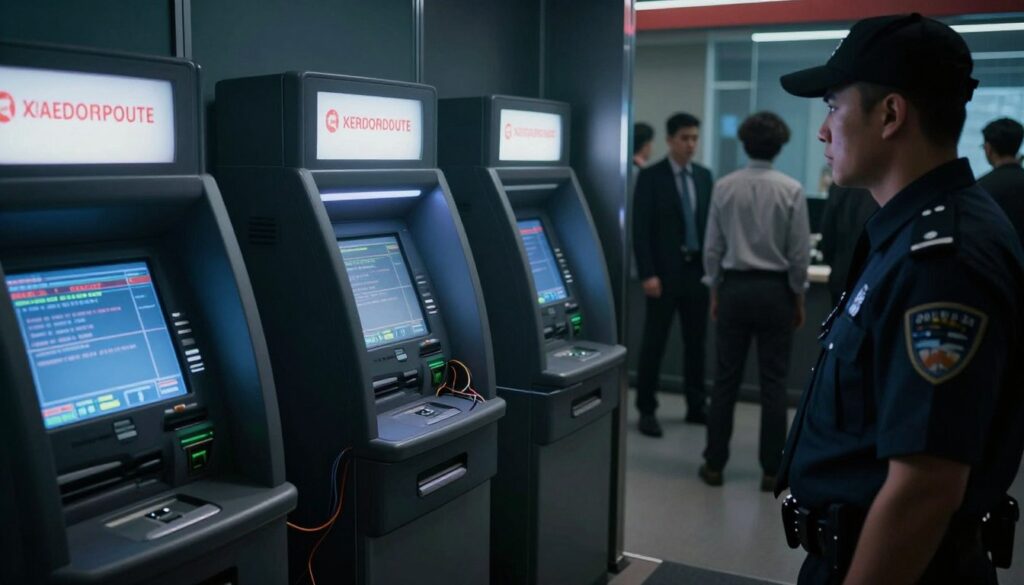
A Nebraska grand jury returned two indictments that describe a multi-year conspiracy where individuals allegedly targeted banks and credit unions to extract cash and launder proceeds.
On December 9, 2025, prosecutors charged 22 people with bank fraud, burglary, and money laundering. An earlier indictment on October 21, 2025, named 32 defendants for conspiracy to commit bank fraud, conspiracy to commit bank burglary and computer fraud, along with multiple counts of fraud, burglary, and damage to computers.
Penalties are severe: some defendants face maximum sentences ranging from about 20 to 335 years, reflecting how U.S. law treats coordinated attacks on financial infrastructure.
Prosecutors allege the organization Tren de Aragua directed members and a gang-like structure to carry out surveillance, breach machine enclosures, deploy code, and move millions dollars through laundering networks.
- The indictments tie bank and computer offenses together under a single conspiracy.
- Law enforcement says the group assigned roles to members and moved dollars across accounts.
- Banks, credit institutions, and unions were among the affected entities, prompting cross-jurisdiction cooperation.
How the Ploutus-driven ATM jackpotting worked

Overview: Criminal teams combined simple field reconnaissance with targeted hardware changes to convert devices into fast payout points.
Reconnaissance and physical intrusion at banks and credit unions
Crews surveyed sites, checked lights, cameras, and alarm responses. They opened hoods or service doors to test whether alarms tripped or staff reacted.
Malware installation paths: hard drive swaps, removable drives, and connected keyboards
With panel access, attackers either swapped a pre-loaded hard drive, installed code on the existing drive, or used thumb drives. Some variants required a physical keyboard to enter commands directly into the machine.
Unauthorized commands to the Cash Dispensing Module and evidence wiping
Once active, the ploutus malware issued unauthorized commands to the dispensing hardware and triggered controlled withdrawals. Toolkits also erased logs and altered data to hide activity from incident teams.
From “money mules” to masterminds: coordinating commands, activation codes, and cash-outs
Remote coordinators sent activation codes to on-site runners who followed a scripted set of commands to limit exposure. The family of attacks began in Mexico in 2013 and evolved by 2017 to target Diebold models across multiple Windows releases.
- Lesson: layered physical security and tamper detection matter as much as software hardening.
- After any panel access, banks and credit unions should verify drive integrity and check for unauthorized peripherals.
Scope, actors, and legal fallout: Tren de Aragua links, losses, and charges

Officials allege a cross-border group executed a multi-year plan to exploit dispensing hardware and funnel proceeds through associates.
Two Nebraska indictments: bank fraud, burglary, computer offenses
The two Nebraska indictments charge bank fraud, bank burglary, conspiracy to commit fraud and computer-related damage. Prosecutors say individuals filled roles from reconnaissance to rapid cash retrieval. Sentences for some counts can add up to lengthy maximums, reflecting how law enforcement treats attacks on financial systems.
Tren de Aragua designation and sanctions
Documents link the operation to tren aragua, designated by authorities as a terrorist organization. Sanctions cited senior figures and named accused who allegedly helped move money and other proceeds to support broader activities.
Impact: scale, losses, and laundering
- Officials report 1,529 incidents across the country and about $40.73 million in losses.
- Prosecutors say proceeds flowed through accounts and a laundering network that sustained group operations.
- The charging papers highlight ploutus malware and a repeat technical method that targeted atm machines and dispensing modules.
Implication: banks and credit institutions should review controls and incident response to guard machines and customer trust.
Conclusion
This case shows how field access and tailored code turned cash machines into rapid payout points.
The investigation links physical tampering and malware vectors such as hard drive and removable media swaps to unauthorized commands that forced fast withdrawals.
For Italian and EU stakeholders, the takeaway is clear: strengthen layered security, enable tamper alerts, and run post-access integrity checks on drives and firmware.
Banks and credit unions should update playbooks: isolate devices, validate firmware, and review command logs quickly. Combine technical controls with staff drills to shorten response times.
Ongoing cooperation with regional regulators and enforcement partners is vital to trace money flows and deter repeat attacks. Jackpotting threats evolve fast; continuous testing and vendor coordination keep defenses ahead.
FAQ
What was the nature of the criminal activity charged in these cases?
Federal prosecutors allege a coordinated campaign of ATM jackpotting that targeted banks and credit unions. Defendants are accused of using Ploutus malware and physical access tactics to force cash dispensers to release money, then laundering proceeds through networks of cash-out agents and money mules.
How did attackers get the malware onto ATMs?
Investigators say the group used a mix of methods: swapping hard drives, inserting removable media, and connecting keyboards or other devices to ATM internals. Those methods allowed operators to load malicious code and gain control over the cash dispensing module.
What exactly did the Ploutus-style malware do once installed?
The malware accepted unauthorized commands and activation codes that triggered cash releases. It also included routines to wipe logs or otherwise hinder forensic recovery, complicating law enforcement efforts to trace actions on compromised machines.
Who carried out the physical and cash-out operations?
The scheme reportedly involved layered roles: reconnaissance teams and intruders who accessed ATM rooms, technical operators who installed malware, and cash-out crews—including money mules—who collected and moved the stolen cash. Coordinators managed timing, activation codes, and distribution of proceeds.
How widespread were the incidents and what are the estimated losses?
Authorities report more than 1,500 jackpotting incidents since 2021, with estimated losses totaling about .73 million at ATMs across the country. Many banks and credit unions experienced repeated attacks, increasing overall disruption and remediation costs.
What charges do the indictments include?
The Nebraska indictments and related filings allege crimes such as bank fraud, burglary, conspiracy to commit computer fraud, and causing damage to protected computers. Charges also target those who aided and abetted the scheme or handled the illicit proceeds.
Are there alleged links to organized crime or terrorist groups?
Prosecutors have alleged connections between some defendants and Tren de Aragua, an organization subject to sanctions and designations for violent and illicit activities. Allegations include using proceeds to finance broader criminal or violent objectives, which can elevate investigative priority.
How are law enforcement agencies investigating and responding?
Federal and local law enforcement coordinated on indictments, search warrants, and seizures to disrupt operations and recover evidence. Agencies also worked with ATM manufacturers, banks, and credit unions to patch vulnerabilities and improve physical and cyber defenses.
What can banks and credit unions do to protect ATMs?
Recommended measures include hardening physical access to ATM interiors, limiting removable-media and USB access, using endpoint security on ATM software, monitoring unusual command activity on cash dispensing modules, and training staff to spot reconnaissance or tampering.
How can consumers protect themselves from losses related to jackpotting?
Consumers should monitor account activity, enable transaction alerts, and report suspicious withdrawals immediately. Financial institutions typically cover unauthorized ATM losses when fraud is reported promptly; timely reporting helps investigations and recovery efforts.
Will banks and credit unions be held liable for these losses?
Liability depends on facts such as whether institutions followed industry security standards and fraud-detection practices. Many institutions pursue recoveries from insurers and cooperate with law enforcement to trace stolen funds and prosecute offenders.
What evidence did investigators recover to support the charges?
Evidence reportedly includes seized devices, hard drives, removable media, command logs, surveillance footage, financial transaction records, and witness statements linking defendants to reconnaissance, installation, and cash-outs.
What penalties could convicted defendants face?
Convictions for offenses like bank fraud, computer fraud, conspiracy, and aggravated burglary carry prison terms, fines, restitution orders, and forfeiture of proceeds. Sentences vary by statute, conduct, and prior criminal history.
Are there ongoing cases or prosecutions related to these incidents?
Yes. Prosecutors have filed multiple indictments and continue to pursue investigations nationwide. Additional arrests, asset seizures, and prosecutions are possible as cases progress and more evidence emerges.